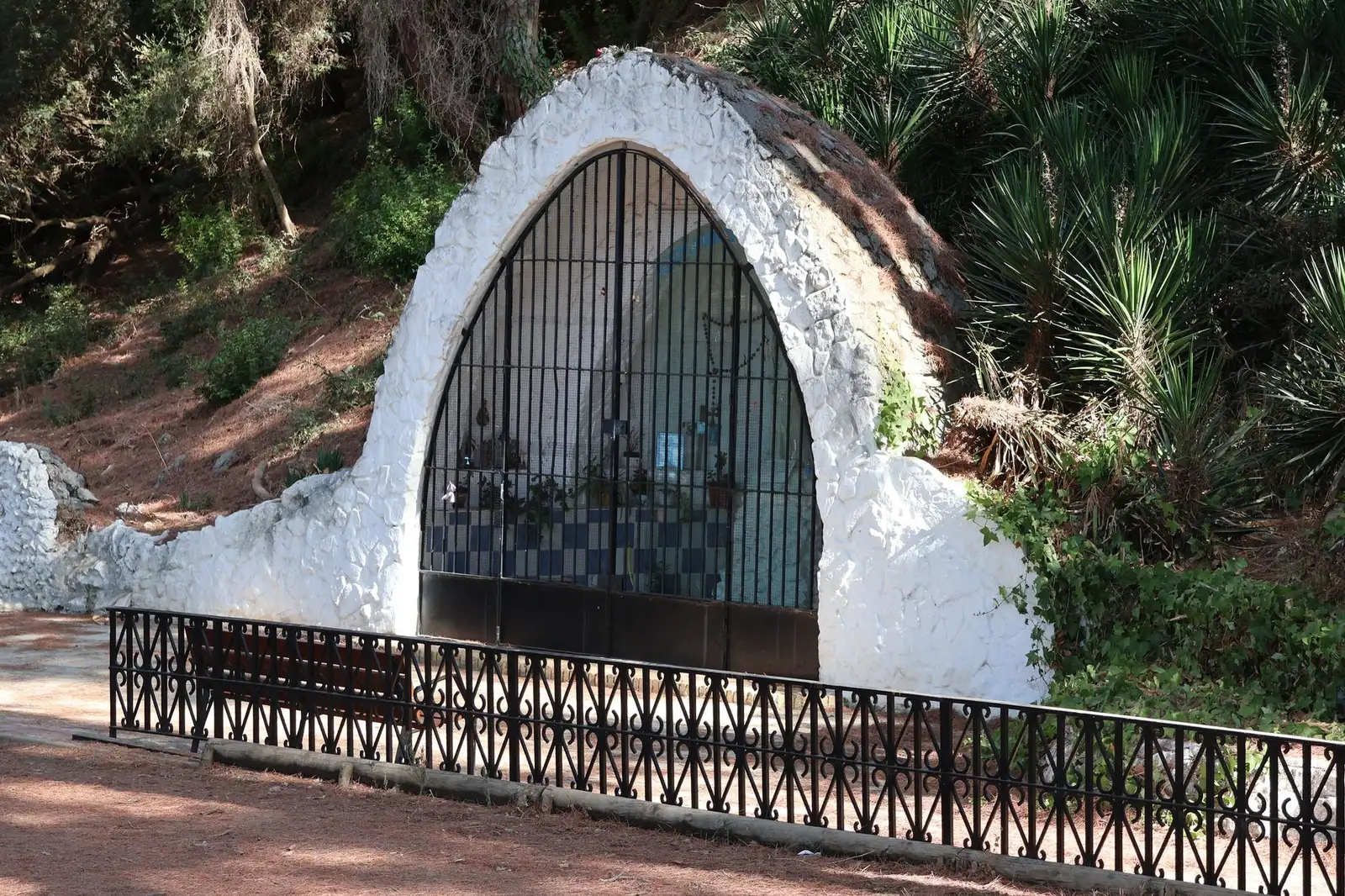

There's a moment that catches most pilgrims off guard. You've traveled hundreds of miles, probably lost sleep on a connecting flight through Paris, maybe dragged a suitcase over cobblestones in the rain... and then you round a corner near the Gave de Pau river and see the Grotto for the first time. Candles flickering. People kneeling in silence. The rock face dark with moisture. Your chest tightens, and you can't quite explain it to anyone who hasn't stood there themselves.
That's Lourdes.
The Story That Started Everything
On February 11, 1858, a fourteen-year-old girl named Bernadette Soubirous was collecting firewood with her sister and a friend near the Massabielle rock, just outside the small market town of Lourdes in the foothills of the French Pyrenees. She heard a sound like wind. Then she saw a light inside a rocky niche, and within it, a young woman dressed in white with a blue sash, holding a rosary of white beads with a golden chain.
Bernadette didn't know what to make of it. Her family certainly didn't believe her at first, and the local authorities were openly skeptical. But the apparitions kept coming.
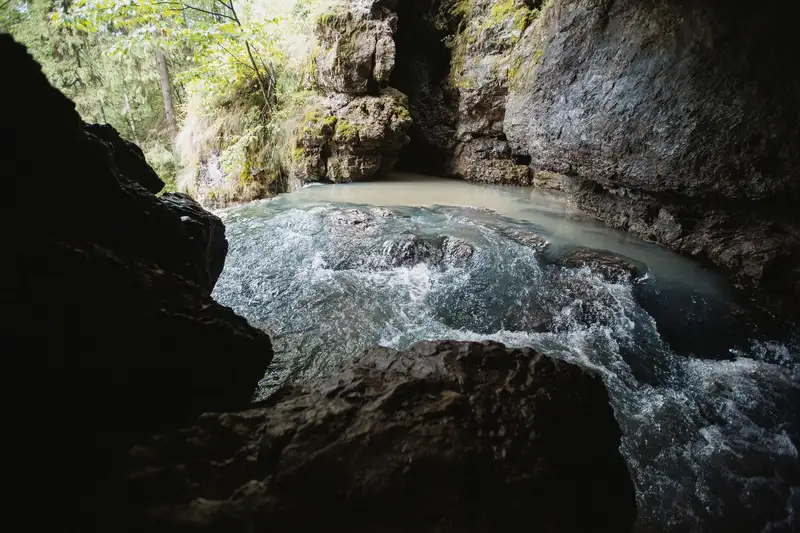
Over eighteen appearances between February and July of 1858, the Lady spoke to Bernadette in the local Gascon dialect rather than formal French. That detail matters more than it might seem. She came to a poor, uneducated girl in her own language, asking for penance and prayer. On February 25th, during the ninth apparition, the Lady told Bernadette to "drink at the spring and wash yourself there." Bernadette scratched at the muddy ground and water began to seep up. Within days, people reported healings. That spring has flowed without interruption ever since, producing roughly 27,000 gallons of water per day.
On March 25, 1858, the Feast of the Annunciation, Bernadette got the name she'd been asking for. The Lady said, in Gascon: "Que soy era Immaculada Concepciou." I am the Immaculate Conception. Pope Pius IX had only formally defined that dogma four years earlier, in 1854. Bernadette had no theological training. She didn't even understand what the words meant when she repeated them to her parish priest, Father Peyramale.
The Church investigated with considerable care. Bishop Bertrand-Sévère Laurence of Tarbes formally recognized the apparitions as authentic on January 18, 1862. Bernadette entered the Sisters of Notre Dame de Nevers in 1866 and lived quietly there until her death on April 16, 1879. Pope Pius XI canonized her on December 8, 1933.
The Miraculous Spring and How the Church Evaluates Claims
More than 7,000 healing claims have been reported at Lourdes since 1858. Of those, the Catholic Church has formally recognized 70 as miraculous, each one reviewed against strict criteria by the Lourdes International Medical Committee (CMIL): the illness must be serious, the cure must be instantaneous and complete, and no medical explanation can account for what happened.
The most recent officially recognized miracle involved Sister Bernadette Moriau, a French nun who had suffered from severe spinal and neurological disorders for decades. After visiting Lourdes in 2008, she experienced a sudden and complete recovery. The Vatican recognized it as a miracle in February 2018.
Does everyone who visits experience physical healing? No. Most pilgrims don't. But the accounts of people who leave Lourdes changed inwardly, even when their bodies remain unchanged, are beyond counting. The healing the Church points to isn't always the one pilgrims arrive expecting.
Key Sites Worth Visiting
The Grotto of Massabielle
This is the heart of everything. It's the actual rocky niche where Bernadette saw the apparitions, left essentially unchanged since 1858. A white marble statue of Our Lady of Lourdes, created by sculptor Joseph-Hugues Fabisch in 1864, stands in the hollow where Bernadette saw the vision. Pilgrims touch and kiss the rock, worn smooth by millions of hands across more than a century and a half. Masses are celebrated here daily at the outdoor altar. The atmosphere here is difficult to describe, quiet and charged at the same time, unlike anywhere else in the Catholic world.
The Basilica of the Immaculate Conception
Built directly into the rock above the Grotto, this neo-Gothic basilica was consecrated in 1876. It's relatively small inside, but the stained glass windows depicting the eighteen apparitions are extraordinary. During peak season it fills fast, so arriving before Mass starts pays off.
The Basilica of Our Lady of the Rosary
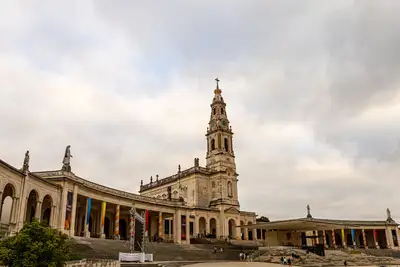
Sitting at the base of the rock, this Romanesque-Byzantine basilica was completed in 1901. It holds 1,500 people and features fifteen chapels dedicated to the mysteries of the Rosary. The mosaics are stunning, depicting pilgrimage groups from different nations who contributed to its construction.
The Basilica of Saint Pius X
Built underground in 1958 to mark the centenary of the apparitions, this enormous concrete structure holds 25,000 people. It's not beautiful in any conventional sense, resembling a bunker more than a church. But when it's full of pilgrims from every corner of the world praying together, something shifts, the architecture falls away.
The Baths
One of the most distinctive practices at Lourdes is immersion in the baths, filled with water from the spring. Volunteers called brancardiers and handmaids lead pilgrims into individual bathing cubicles, where they're submerged briefly in cold water, then helped out again. No soap, no towel. The water is shared among thousands of pilgrims each day, and yet infection rates remain near zero, something medical observers have noted for decades without a convincing explanation.
Hours run Monday through Saturday, 9:00 AM to 11:00 AM and 2:30 PM to 4:00 PM, and Sunday from 2:00 PM to 4:00 PM. Lines get long in summer. Still worth it.
The Candlelight Marian Procession
Each evening during pilgrimage season (roughly April through October), thousands of pilgrims gather at the Grotto after dark and process to the Rosary Esplanade carrying candles or electric torches, singing the Lourdes hymn "Immaculata" in multiple languages at once. It begins at 9:00 PM. Watching the esplanade fill with moving lights stretching into the darkness, hearing the same prayer rising in French, Polish, Spanish, Italian, and English all at once... there aren't words for it afterward. You remember it.
The Way of the Cross
The outdoor Stations of the Cross wind up the hillside above the Grotto through a wooded path. The bronze figures at each station are life-sized and remarkably expressive, sculpted by Frédéric-Joseph Bosio's studio. At a reflective pace, the walk takes about 45 minutes. Many pilgrims do it barefoot. Some carry large wooden crosses up the hill. Go early in the morning if you want quiet.
The Cachot
A short walk from the Sanctuary, the Cachot is the single-room jail cell where Bernadette's family lived when she received the apparitions. The family of eight shared this space after being evicted from their home. It's almost shockingly small. Visiting puts the whole story in a context that no book quite manages.
Spiritual Practices for Pilgrims
Lourdes isn't a tourist destination with religious elements added on. It's the other way around. Everything here is oriented toward prayer, sacrament, and conversion.
The Rosary is prayed throughout the day at various locations in the Sanctuary. Pilgrims are welcome to join any group they come across.
Adoration of the Blessed Sacrament takes place in the Chapel of Adoration, open from 6:00 AM to midnight during the season. It sits behind the Grotto and is almost always occupied by kneeling pilgrims.
The Sacrament of Reconciliation is central to the Lourdes pilgrimage. Priests from dozens of countries are available throughout the day in the Reconciliation chapels, hearing confessions in their native languages. It's one of the better places in the world to receive this sacrament, not because the surroundings make it easier, but because being around suffering, hope, and mercy makes it feel more real. No appointment needed. Just go.
Masses are celebrated throughout the day in multiple languages. The International Mass at the Basilica of Saint Pius X draws pilgrims from every nation and is celebrated in Latin with readings in various languages. The current daily schedule is on the Lourdes Sanctuary website at lourdes-france.org.
Volunteering deserves a mention here. If you're able-bodied and planning an extended stay, consider serving other pilgrims rather than only receiving. Many pilgrimage groups include volunteers who help transport sick pilgrims, assist at the baths, or serve in other ways. It changes the pilgrimage considerably.
Planning Your Visit: Practical Information
When to Go
The official pilgrimage season runs from March 25 through October 31. August is by far the busiest month, with the Assumption Pilgrimage around August 15 drawing hundreds of thousands of people. If you want the full, overwhelming communal atmosphere, August delivers it. If you'd prefer shorter lines, easier access to the Grotto, and more breathing room, late September or early October is a much better fit.
The Sanctuary stays open year-round, and some pilgrims choose winter deliberately, when the town is quiet and the Grotto feels almost private. Be aware that many hotels and services close between November and March.
Getting There
Lourdes has its own airport, Aéroport Tarbes-Lourdes-Pyrénées (LDE), receiving charter flights from the UK, Ireland, and other parts of Europe during pilgrimage season. From Paris, the TGV to Tarbes takes about five hours, with a short regional train or taxi from there into Lourdes. By car, Toulouse is about 1.5 hours away, and the town is also reachable from the Spanish border via the Pyrenees.
If you're deciding between an organized pilgrimage group and going independently, the framework at DIY vs Guided Tours: A Framework for Choosing is worth reading. Lourdes is one destination where joining a national pilgrimage organization can make a real difference, particularly if you're traveling with someone who is ill or has mobility needs. Groups like the Irish National Pilgrimage through Marian Pilgrimages or the UK's Handicapped Children's Pilgrimage Trust (HCPT) provide volunteer support, medical assistance, and spiritual accompaniment that's hard to replicate on your own.
Accommodations
For a town of roughly 14,000 permanent residents, Lourdes has a remarkable number of hotel beds, something around 270 hotels. Options range from budget pilgrim hostels to comfortable three-star hotels along the Boulevard de la Grotte, which runs directly to the Sanctuary entrance.
Anywhere within walking distance of the Sanctuary is a good choice, which in practice covers most of the town. Hotels on the Boulevard de la Grotte are convenient but book up months ahead during August. If you're traveling in summer, getting reservations in by February is advisable.
Several religious orders run pilgrim houses offering simple rooms at lower cost. Notre Dame de Lourdes Centre provides beds for sick and disabled pilgrims. If you're traveling with someone who has significant health needs, contact the Sanctuary's Service d'Accueil des Malades before you arrive.
Accessibility
Lourdes is one of the most accessible pilgrimage destinations in the world, and that's by design. The Grotto and Esplanade are wheelchair accessible. The baths have dedicated areas for pilgrims who can't stand. The underground Basilica of Saint Pius X was built partly with wheelchair access in mind. Volunteers with wheelchairs and stretchers, called voitures, are available throughout the Sanctuary grounds at no charge.
The town itself is hilly in places, and some hotels have steps without lifts. If accessibility matters to your planning, ask about ground-floor rooms and confirm lift access when you book.
What to Bring
Comfortable walking shoes are essential. A rain jacket too, since Pyrenean weather doesn't care what month it is. A rosary. If you plan to take the baths, you don't need a swimsuit, as bathing is done in a cloth wrap provided on-site. Candles are sold at the Sanctuary for very little, with proceeds going to the shrine, but bringing your own is fine. A journal is worth considering.
A Note on "Authenticity"
There's a piece at What 'Authentic' Actually Means that unpacks why that word has worn thin in travel writing. At Lourdes, though, it has a specific answer. The Sanctuary is both one of the most commercially developed religious sites in Europe, the souvenir shops selling plastic Bernadette figurines are genuinely tacky, and one of the most holy places you can visit. Neither fact cancels the other. The commercialization surrounds the Grotto rather than undermining it. Learn to walk past the shops, and you'll find what you came for.
A Few Things Nobody Mentions Before You Go
Water from the spring is available to drink and take home at the outdoor taps near the Grotto, free of charge. Drinking fountains near the baths work too. Many pilgrims bring empty bottles for this reason.
The Grotto is open 24 hours a day, every day of the year. In the middle of the night, it can be completely silent, only you, the candles, and the rock. If you're staying nearby, go at least once.
The Lourdes Medical Bureau is open to the public. If you've experienced something you can't explain, you can report it there and begin the formal documentation process. The staff are professional and engaged.
August at Lourdes is loud. Hundreds of thousands of pilgrims, dozens of languages, constant movement. Don't let that put you off. The Grotto holds a quality of silence even inside the noise, and that's one of those things that doesn't make sense until you're standing in it.
Coming Home Differently
Most pilgrims to Lourdes don't receive a physical cure. They don't expect one, even when they're hoping for one. What they tend to describe afterward is something harder to name: a sharper sense of what matters, less fear around suffering, a feeling of having stood somewhere that heaven and earth came unusually close together.
Bernadette herself, when asked what made her happy about the apparitions, reportedly said it was simply being there. The Lady's presence. The encounter with someone infinitely beyond herself.
That's what pilgrims keep returning for. Not the baths or the basilicas or even the miracles, though all of those are real. It's the sense of being in a place where a girl living in poverty was chosen to receive something extraordinary, and where that gift has kept flowing outward to anyone willing to make the journey.
Every single time.
Comments (0)
No comments yet. Be the first!