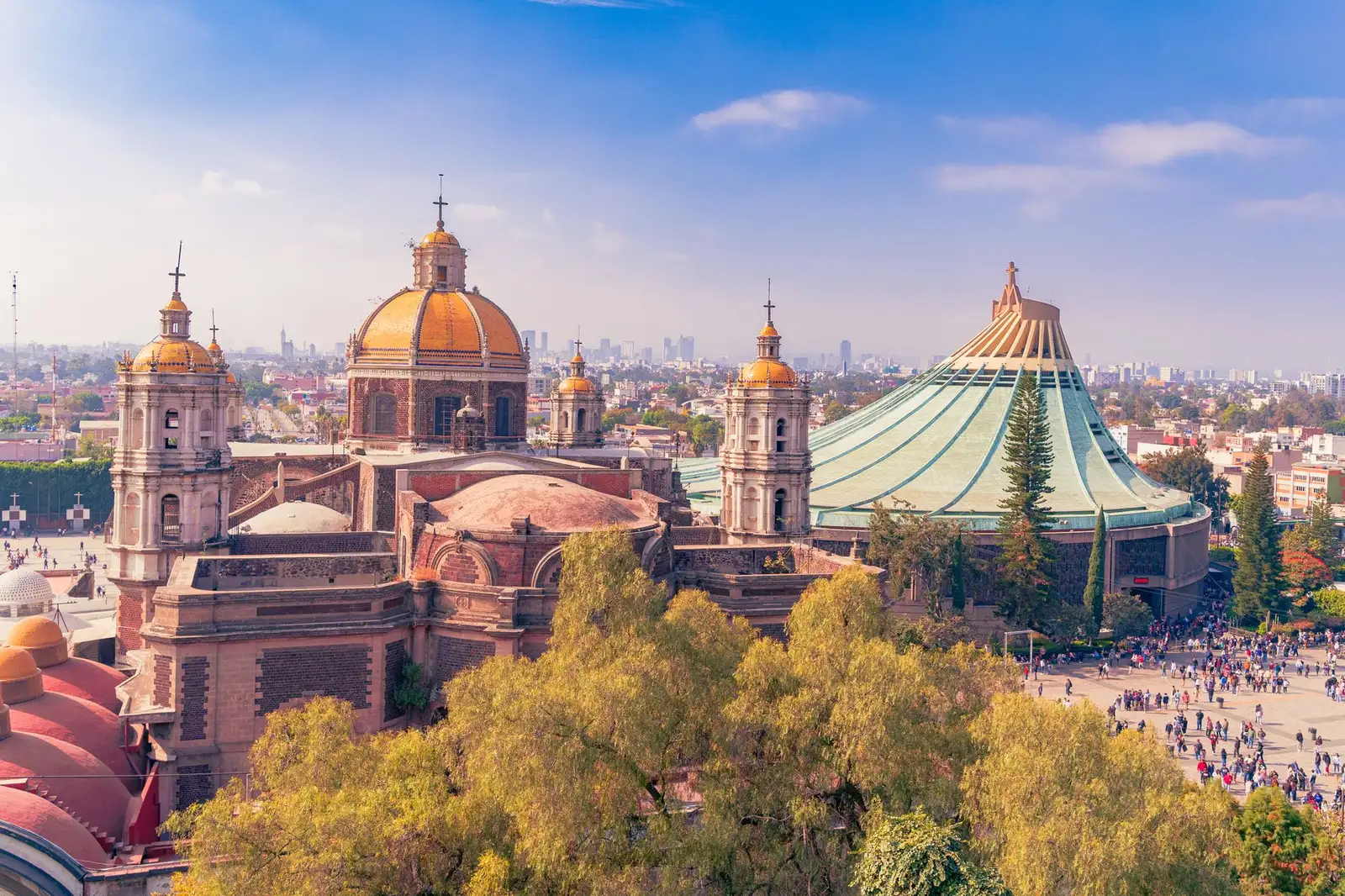

The candles had been burning for hours. Standing inside the Basilica of Our Lady of Guadalupe in Mexico City on a Tuesday morning in December, surrounded by pilgrims who'd traveled thousands of miles, some on their knees across cold stone, I felt the air shift. It wasn't tourism. It was older, more urgent, and beyond words.
Catholic pilgrimage isn't a vacation with a cathedral thrown in. It's a deliberate act of seeking.
What follows covers the major Catholic pilgrimage destinations around the world, with practical notes on what to expect, when to go, and what most travel guides quietly skip. Whether you're planning your first pilgrimage or returning after years away, this material matters.
Why Pilgrimage Still Matters
People have been walking to holy places since long before Christianity existed. But the Catholic tradition carries particular weight: a theology of the journey itself as prayer. You don't just arrive somewhere sacred. You move toward it, and that movement transforms you: which is the whole point.
The Catholic Church officially recognizes certain sites as places of special grace. Some carry plenary indulgences tied to specific feast days. Others are Marian apparition sites approved after decades of Church investigation. Knowing the difference matters when you're deciding where to go and why.
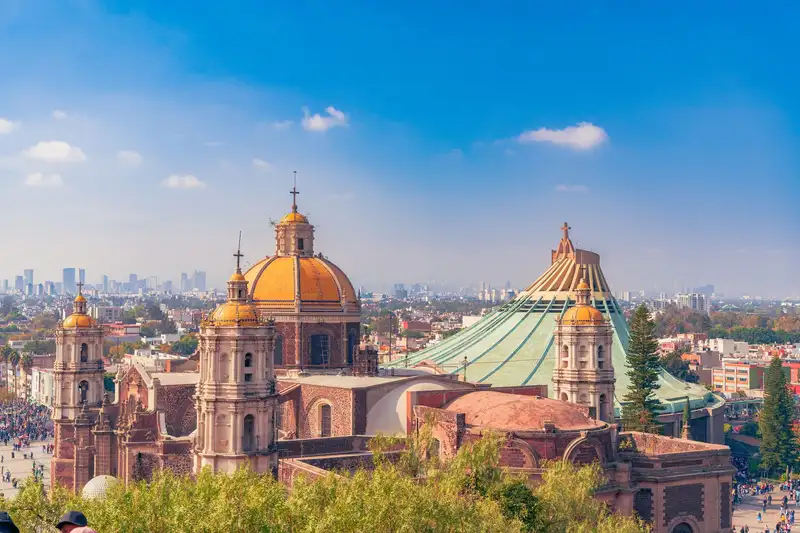
Rome: The Eternal City and Its Seven Churches
Rome isn't just a destination. It's the center.
For Catholics, the city means the tomb of St. Peter beneath the basilica bearing his name. It means the catacombs along the Appian Way where early Christians buried their dead. It means an extraordinary concentration of relics, shrines, and sacred art that no other city on earth can match. The Vatican Museums alone could occupy three full days, but most pilgrims make the mistake of spending all their time there and missing the pilgrimage circuit.
The Seven Pilgrim Churches of Rome, a tradition formalized by St. Philip Neri in 1552: connects St. Peter's, St. Paul Outside the Walls, St. Sebastian, St. John Lateran, Holy Cross in Jerusalem, St. Lawrence Outside the Walls, and St. Mary Major. Walking between them takes most of a day. Philip Neri turned it into an all-night prayer walk with music and food stops, which sounds remarkable... and was popular enough that it eventually evolved into what we now call the Jubilee pilgrimage tradition.
During Holy Years (the most recent being 2025), the indulgences attached to this circuit are heightened. Plan accordingly.
Practical notes: The Vatican requires modest dress, covered shoulders, no shorts above the knee. Lines for St. Peter's Basilica can run two hours in summer. Book a guided tour of the Vatican Necropolis at least two months ahead through the Vatican's website. The effort pays off.
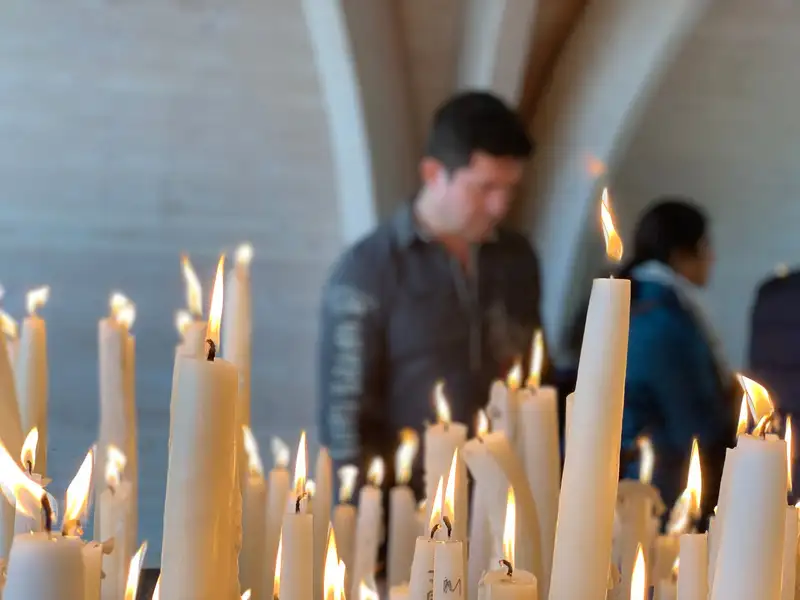
Santiago de Compostela: The Road Itself Is the Pilgrimage
Spain's Cathedral of Santiago de Compostela in Galicia holds the tomb of St. James the Apostle. People have been walking to it since the 9th century, and today nearly half a million complete one of the Camino routes each year. The pilgrimage stands apart from anything else in Catholic tradition.
What makes the Camino different is the walk itself. You don't fly into Santiago and visit. You earn it. The most famous route, the Camino Francés, starts in St. Jean Pied de Port on the French side of the Pyrenees and covers roughly 800 kilometers over 30-35 days. The Camino Portugués from Lisbon runs about 620 kilometers. Each route has its own character, its own terrain, its own communities of pilgrims who form around you as you go.
The pilgrim credential (a small passport you collect stamps in at churches, guesthouses, and cafes along the way) is one of the more quietly meaningful objects you'll encounter. By the time you reach Santiago, those pages are a record of everywhere you've been and everyone who welcomed you.
Can't do 30 days? The Church recognizes a minimum of 100 kilometers on foot to receive the Compostela certificate. The Camino Portugués from Tui, across the Portuguese border, covers exactly that distance and offers a beautiful walk through Galician countryside.
Fatima: The Apparition Site That Changed the 20th Century
On May 13, 1917, three shepherd children in Fatima, Portugal reported the first of six apparitions of Our Lady. Lucia dos Santos and her cousins Francisco and Jacinta Marto described conversations with a figure who called herself "Our Lady of the Rosary." After investigation, the Church approved the apparitions in 1930.
Francisco and Jacinta were beatified by Pope John Paul II in 2000 and canonized by Pope Francis in 2017. Lucia, who became a Carmelite nun and died in 2005, has her cause for beatification currently under review.
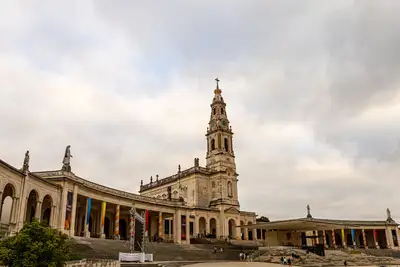
The Sanctuary of Fatima today is enormous, built around the original site. The Capelinha das Aparições, the small Chapel of the Apparitions built where the holm oak tree once stood, is the spiritual heart of the place. Pilgrims often arrive barefoot, some traveling on their knees along the long marble esplanade, fulfilling promises made in prayer.
The 13th of each month from May through October draws large crowds, with the biggest gatherings on May 13 and October 13, anniversary of the Miracle of the Sun. Outside those dates, the sanctuary is peaceful and deeply prayerful. Daily international Mass runs at the Basilica of Our Lady of the Rosary.
One thing most guides don't mention: The original home of the Marto children in nearby Aljustrel is open to visitors and rarely crowded. Walking through those small stone rooms where Francisco and Jacinta grew up leaves an impression.
Lourdes: Where the Sick Come to Pray
Lourdes is unlike anywhere else on this list. It draws millions of pilgrims annually, many of them seriously ill, many accompanied by volunteer helpers called brancardiers. The healing spring (discovered after 14-year-old Bernadette Soubirous reported apparitions of the Virgin Mary beginning February 11, 1858) has been associated with 70 miracles verified by the Church's Medical Bureau.
The baths are central to the Lourdes pilgrimage for most visitors. You wait in line, sometimes for hours, then enter a small tiled room where volunteers help you immerse briefly in cold spring water. It's roughly 12 degrees Celsius year-round. The moment is quiet, unhurried, and for many people, carries weight for the rest of their lives.
July and August bring crowds to the point of overwhelming. The evening torchlight procession runs daily during pilgrimage season and draws tens of thousands. For something more contemplative, early May or late September offers a different atmosphere entirely.
The Grotto of Massabielle, where Bernadette knelt during the apparitions, stays accessible at any hour. Many pilgrims prefer visiting at night, when the crowds thin and the candlelit setting becomes harder to describe.
Jerusalem and the Holy Land: Walking Where Jesus Walked
No guide to Catholic pilgrimage is complete without the Holy Land, and I'd argue it belongs in a category of its own. You're not traveling to a site associated with a saint's life or a Marian apparition. You're walking the actual geography of the Gospels.
Jerusalem's Via Dolorosa follows the traditional route of Christ's Passion through 14 Stations of the Cross. The Church of the Holy Sepulchre, built over Calvary and the empty tomb, has drawn pilgrims since the 4th century, when St. Helena identified the site. Six Christian denominations share the church today, creating an atmosphere that's occasionally tense and always fascinating.
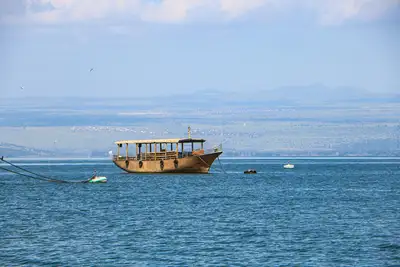
Bethlehem, the Sea of Galilee, the Mount of Beatitudes, the Jordan River, all of these are within reach of a well-planned itinerary. Ten days is the minimum for a meaningful visit; two weeks is better.
Before planning, check current travel advisories at the U.S. Department of State's country information pages. The security situation changes week to week, and traveling with a reputable Catholic pilgrimage group is worth considering for a first visit.
The question of going solo versus joining a guided tour matters a great deal here. A guide with theological and historical depth transforms what you see. This framework for deciding between DIY and guided tours is worth reading if you're weighing the options.
Knock, Ireland: The Silent Apparition
Knock doesn't get the attention it deserves.
On August 21, 1879, fifteen people in the small village of Knock in County Mayo witnessed an apparition at the south gable of the parish church. Our Lady, St. Joseph, St. John the Evangelist, and a lamb on an altar, all completely silent. No words were spoken. Witnesses ranged in age from 5 to 75, people of solid reputation in the community, and a Church commission found their testimony reliable.
Pope John Paul II visited on September 30, 1979, during the centenary year. The shrine today includes the original church, a large modern basilica completed in 1976, and the Chapel of Reconciliation where confession is available throughout the day. Knock is associated with healing and the sacrament of reconciliation, and the atmosphere is devotional without tipping into the commercial.
It's easy to reach too, Ireland West Airport Knock sits right next to the shrine. Worth it.
Guadalupe, Mexico: The Image That Converted Millions
On December 9, 1531, a recently baptized indigenous man named Juan Diego Cuauhtlatoatzin reported an apparition of the Virgin Mary on Tepeyac Hill near what is now Mexico City. She spoke to him in Nahuatl, his own language, and asked for a church to be built on that hill.
The miraculous image imprinted on Juan Diego's tilma, his cloak, remains at the Basilica of Our Lady of Guadalupe. Scientists have been studying it since the 1970s. No explanation for its origin has emerged. Under magnification, the image shows no brush strokes. The pigments don't match any known 16th-century materials. The eyes appear to contain reflections of human figures, consistent with the optics of an actual human eye.
Juan Diego was canonized by Pope John Paul II in 2002.
My December visit confirmed what I'd read but hadn't quite believed: this is the most visited Catholic shrine in the world, drawing over 20 million pilgrims each year. On December 12, the feast day, pilgrims arrive through the night, some crossing the plaza on their knees. A moving walkway carries visitors past the tilma, giving each person about 30 seconds in proximity to the image.
Assisi, Umbria: The World St. Francis Built
Assisi is one of those places where the physical setting and the spiritual history align so well it almost seems arranged. The Umbrian hillside, the pale pink-white stone of the medieval town, the basilicas holding Giotto's famous fresco cycle of St. Francis's life; it's all there, and it's beautiful.
St. Francis (1181/82-1226) received the stigmata at La Verna, a mountain sanctuary about two hours away, in September 1224. His tomb is in the lower church of the Basilica of San Francesco. The Porziuncola, the tiny chapel where Francis founded the Franciscan order, now sits enclosed within the enormous Basilica of Santa Maria degli Angeli on the plain below the hill town.
St. Clare of Assisi, Francis's contemporary and founder of the Poor Clares, is buried in the Basilica of Santa Chiara. Her incorrupt body is visible in the crypt.
Late April, before the summer crowds arrive, is when Assisi is at its best. The almond trees are flowering in the valley and the pilgrim routes through Umbria are quiet enough to walk in peace.
For broader destination inspiration while planning a trip to Italy, National Geographic's destination guides cover the region well.
Planning Your Pilgrimage: Practical Frameworks
A pilgrimage budget isn't a vacation budget, and the differences matter.
The pace is slower. Pilgrimage involves a lot of waiting, in lines for confession, for Mass, for entrance to shrines. Build in time you won't naturally account for. Accommodation near major shrines varies wildly in quality and price; Lourdes has budget dormitories run by diocesan groups alongside reasonable hotels, while Santiago's Camino has a network of albergues (pilgrim hostels) running 8-15 euros per night. Rome is simply expensive and requires advance booking.
A realistic budget framework for any of these destinations should cover the costs that only show up once you're on the ground. This budget framework at TripPlan handles exactly those categories.
Group pilgrimage versus independent travel is a genuine decision, not a logistical one. Organized Catholic pilgrimage groups often include chaplains, daily Mass at the shrines, and theological context that deepens the pilgrimage. The tradeoff is flexibility. What you need from the journey should drive that choice.
The Spiritual Preparation That Most People Skip
Here's something worth saying plainly: the grace available at pilgrimage sites is real, but it isn't automatic.
The Church's theology of pilgrimage involves interior disposition. Going to Fatima while spiritually disengaged will give you a beautiful trip to Portugal, nothing more. Going after genuine preparation (prayer, confession, a clear intention) is a different thing entirely. Every spiritual director who works with pilgrims says this, and they're right.
Before any major pilgrimage, I'd suggest making a good confession before departure, settling on a specific intention to carry through the journey, and reading something substantive about the site beforehand, not a travel guide, but the actual history and theology. Keeping a journal during the trip is worth more than most people expect.
The word "authentic" gets applied to travel constantly now, often meaning very little. For what it actually means in a spiritual context, this piece on authenticity makes some useful distinctions.
Which Destination Is Right for You?
Not every pilgrimage suits every pilgrim, and it's worth being honest about that.
Good physical health and 4-6 weeks available? The Camino de Santiago offers what no shrine visit can replicate, the experience of sustained physical effort as prayer, community formed with strangers on the road, and an arrival that means something because of everything that came before it.
Seeking healing, whether physical, spiritual, or otherwise? Lourdes has particular grace. The presence of the sick and their caregivers changes the atmosphere in ways you won't anticipate before arriving.
Wanting the theological depth of walking actual Gospel geography? The Holy Land is irreplaceable, full stop.
Starting somewhere manageable? Assisi is beautiful, spiritually rich, and logistically straightforward from most European airports.
Rome, in the end, belongs on every serious Catholic pilgrim's list. Go at least once.
A Final Word
Pilgrimage has survived two thousand years because it works. Not as a transaction where you deposit effort and receive grace in return, but as a form of prayer that uses your whole body; your time, your discomfort, your attention. The waiting, the unfamiliar food, the blisters on the Camino, the cold water at Lourdes... all of it is the pilgrimage, not the moment you reach the shrine.
Go prepared. Go with intention. And go.
Comments (0)
No comments yet. Be the first!