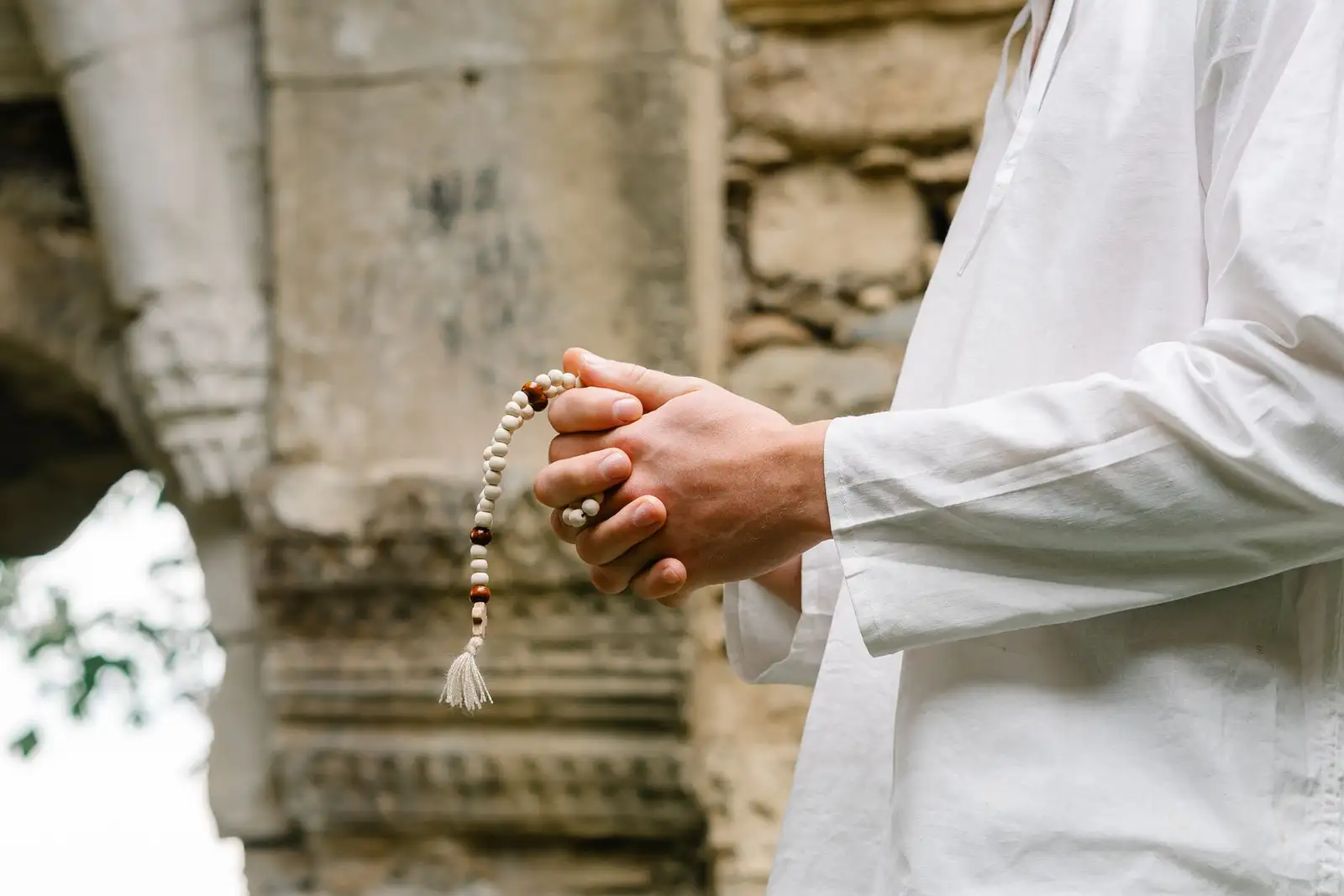

The morning before I left for Lourdes, I sat in my kitchen at 5 a.m. with a cup of coffee going cold beside me, uncertain whether I was ready. Not logistically. Spiritually. I had the flights booked, the hotel confirmed, the rosary packed. But the preparation felt incomplete, like I was about to walk into a conversation I hadn't prepared for.
That feeling, it turns out, is exactly where spiritual preparation begins.
Most pilgrimage guides will tell you to pack light, book early, and bring good walking shoes. All true. But the interior work, the preparation of your soul for what's coming, gets far less attention than it deserves. And that's the whole point of pilgrimage in the first place. You're not just traveling to a place. You're traveling toward transformation.
Why Spiritual Preparation Matters
Here's a question to sit with: what separates a Catholic pilgrimage from a very scenic vacation?
The answer isn't the destination. It's the disposition you bring to it. Pilgrims who arrive at Fatima or Santiago de Compostela or the Holy Land without interior preparation often describe the experience afterward as moving, beautiful, even emotional: but vague. They felt stirred by it, but couldn't name it. They came home with photos instead of transformation.
Contrast that with pilgrims who spent four to six weeks preparing their hearts. They tend to describe moments of grace in vivid detail. A confession at the Grotto of Massabielle that broke open something inside. A Mass at the Church of the Holy Sepulchre in Jerusalem that felt, for the first time, completely true. Preparation doesn't manufacture those moments, but it creates the conditions for them to happen.

Start With an Honest Examination of Where You Are
Before you plan anything spiritual, you need to know what you're bringing with you on this pilgrimage. Not the version of yourself you aspire to be. Your current reality.
This means sitting down (pen and paper, quiet room, no phone) and asking yourself hard questions. What do I hope to receive on this pilgrimage? What am I carrying that I need to let go of? Is there a wound I've been avoiding? A sin I haven't confessed? A relationship that needs healing?
Don't rush this. Give it an hour, maybe more. The Catholic tradition has always understood that self-knowledge is the foundation of spiritual growth. St. Teresa of Ávila wrote extensively about this in her 1577 work "The Interior Castle," arguing that we can't truly encounter God if we don't first know ourselves. She wasn't being harsh. She was being practical.
Write down what surfaces. You don't have to share it with anyone. But write it down.
Confession Before You Go
This one isn't optional. It's the single most important practical step in spiritual preparation for any Catholic pilgrimage.
If you haven't been to confession in a while, or a long while, don't let embarrassment stop you. Priests who hear confessions at pilgrimage destinations like the Basilica of Our Lady of Guadalupe in Mexico City or the Sanctuary of Monte Cassino in Italy will tell you they've heard it all. Nothing surprises them. What does surprise them is pilgrims who arrive at a sacred site still carrying burdens they could have set down before they left home.
Schedule the confession at least two weeks before your departure. This gives you time to examine your conscience thoroughly, and it gives whatever grace you receive room to settle before the journey begins. Some spiritual directors recommend going twice: once in preparation and once during the pilgrimage itself, if the opportunity arises.
If you're not sure how to prepare for a thorough examination of conscience, the USCCB (United States Conference of Catholic Bishops) has solid resources at usccb.org that walk through the process clearly.
Build a Prayer Rule for the Weeks Before
Spiritual preparation isn't a single event. It's a practice. And like any practice, it needs structure.
In the four to six weeks before your pilgrimage, consider adding daily prayers that connect you to the destination you're visiting. If you're heading to Lourdes, pray the Rosary with an intention related to healing; your own, or for someone you're carrying with you. If you're going to the Holy Land, read one passage from the Gospels each day and try to picture the actual geography. The Sea of Galilee. The Mount of Olives. The narrow streets of Jerusalem's Old City. Make it concrete.
Don't overcomplicate this. A daily prayer commitment you'll actually keep is infinitely better than an ambitious one you'll abandon by day three. Start with fifteen minutes. Add the Liturgy of the Hours if you're drawn to it. Some pilgrims read a chapter of the relevant saint's biography each day: if you're heading to Assisi, pick up "Francis of Assisi: A New Biography" by Augustine Thompson, published in 2012. It's readable, it's honest, and it'll give you material to think about on the plane.
The Role of Fasting and Physical Preparation
This might surprise you, but fasting is one of the most underused tools in pilgrimage preparation.
The Church has always connected fasting to spiritual clarity. It's not about punishment. It's about recalibrating your attention. When you give up something (even something small, like coffee on Fridays, or dessert during the week before departure) you create a physical reminder of the spiritual reality you're preparing for. Every time you feel that small absence, it becomes a moment of prayer.
For pilgrims heading to Medjugorje, fasting has a traditional form: bread and water on Wednesdays and Fridays. The visionaries have consistently passed along this message since the apparitions began in June 1981. Whether or not you're going to Medjugorje, the practice of intentional fasting in the weeks beforehand deserves consideration for any major pilgrimage.
Physically, prepare your body too. Most pilgrimage routes involve significant walking. The Camino de Santiago's Francés route covers roughly 800 kilometers. Even shorter pilgrimage days (walking from Lourdes town to the Domaine, processing through the Sanctuary) can cover several kilometers on uneven ground. Start walking. Not to get fit in a gym sense, but to practice the rhythm of walking as prayer, which is distinct from walking as exercise.
Choosing Intentions
Every pilgrimage should be carried with clear intentions. Not vague ones. Names, needs, prayers.
Before you leave, sit down and make a list. Write the names of people you'll be praying for during this journey. Include people you find difficult to love. Include the dead. Include yourself: and be clear about what you're asking for, because sometimes we dress up our real needs in more acceptable-sounding requests.
Bring this list with you physically. Write it on a small card and keep it in your pocket or your pilgrim credential booklet. Pull it out when you light a candle at a shrine, or when you're walking a long stretch and your mind starts to wander. Having names grounds the prayer in reality.
At Santiago de Compostela, there's a tradition of placing a stone at the Cruz de Ferro, the Iron Cross, on the way through the Camino. Pilgrims carry the stone from home, often for months, as a physical symbol of what they're bringing to lay down. It's a beautiful practice, and you don't need to be walking the Camino to adapt it. Find some small physical object to carry that represents what you're bringing to the shrine. Leave it there, or don't. But carry it with intention.
Spiritual Direction and Community
If you have access to a spiritual director, this is the moment to use that relationship actively.
Tell your director about the pilgrimage. Share what you wrote down in your examination. Let them help you identify what this journey might mean for you spiritually: because often, the significance of a pilgrimage isn't obvious until someone helps you see the pattern in your own life. A good spiritual director will ask questions that clarify what God might be doing in this season.
No spiritual director? Consider whether there's a trusted priest or deacon you could speak with, even informally. A single thirty-minute conversation before a major pilgrimage can reframe the whole experience.
If you're traveling with a group (many pilgrims do, through organized tours) get to know the people you'll be with beforehand if possible. Pilgrimage communities form quickly and deeply, but starting with even a brief email exchange or phone call helps. The shared prayer and conversation of fellow pilgrims is itself a form of spiritual preparation that you can't manufacture alone.
For a thoughtful look at whether a guided group pilgrimage or a more independent journey suits you better, this framework from TripPlan covers the tradeoffs that most travel guides skip over entirely.
Understanding the Theology of Pilgrimage
You don't need a theology degree to go on pilgrimage. But understanding even a little of why the Church considers pilgrimage a spiritually meaningful act will deepen what you receive from it.
At its core, Catholic pilgrimage is an outward expression of an inward journey. The body moves through physical space (across deserts, through mountain passes, along coastal paths) and this movement becomes an image of the soul's movement toward God. The Catechism of the Catholic Church describes pilgrimage as a sign of our earthly life as a journey toward heaven (CCC 2691). You're not just going somewhere. You're enacting, in your body, what you believe your whole life is doing.
The Stanford Encyclopedia of Philosophy's entry on religious experience offers a fascinating secular analysis of what happens when people encounter the sacred in particular places and practices. It takes the experience seriously, and it can help you understand why certain sites have drawn pilgrims for centuries. There's something true happening. It's worth understanding it better.
Sacred sites are sacred partly because of the prayers that have accumulated there over generations. When you stand at the tomb of St. Peter beneath the Vatican's main altar, you're standing in a place where Christians have prayed since the first century. It's history. Let yourself feel the weight of it.
What to Read Before You Go
Reading is one of the most overlooked forms of spiritual preparation. Not travel guides: spiritual reading connected to your destination.
Going to Rome? Read "The Confessions" of St. Augustine. It's available free online, it takes about two weeks to read in daily sections, and it will put you in a completely different frame of mind for encountering the early Church's monuments. Going to Fátima? Read Sister Lúcia's memoirs, the fourth memoir in particular, written in 1941, gives the most complete account of the apparitions in her own words. It's direct and unlike anything you'll read in a tourist brochure.
Going to the Holy Land for the first time? Read the Gospel of Mark in its entirety the week before you leave. It's the shortest gospel. It moves fast. And reading it right before you walk through Galilee and Jerusalem gives the landscape a completely dimension. You'll find yourself stopping on a hillside and thinking: this is where that happened.
Practical Preparations That Are Also Spiritual
Some practical decisions are also spiritual ones, and it's worth recognizing them as such.
Your budget, for instance. Pilgrimage isn't supposed to be luxurious: though there's no virtue in unnecessary discomfort either. Think honestly about what you're spending and why. Are you adding the premium hotel because you genuinely need rest, or because you're avoiding the simplicity the journey is asking of you? Building a realistic travel budget matters practically, but it's also a spiritual practice in detachment. Knowing what you have and what you'll spend frees your mind to be present.
Similarly, think about your phone. Most pilgrims struggle with this. The instinct to document everything (to photograph the shrine, post from the grotto, share the sunrise over the Sea of Galilee) is strong. And there's nothing inherently wrong with it. But consider designating certain moments as phone-free. The time of Mass. The first fifteen minutes at a new shrine. The walk from your accommodation to the sacred site each morning. Protect those moments.
The Last Week Before Departure
In the final week, pull everything together.
Revisit the intentions you wrote down. Add anything new. Pray through them once, slowly, by name.
Go to Mass if you haven't recently. Receive communion with the explicit intention of preparing your heart for what's coming.
If there's a grace you're hoping for on this pilgrimage (healing, clarity, reconciliation, a renewed sense of vocation) state it plainly in prayer. Don't be coy with God. Ask for what you actually want. The tradition is full of pilgrims who arrived at shrines with desperate, clear requests. Many of them received answers they didn't expect. That's the pattern.
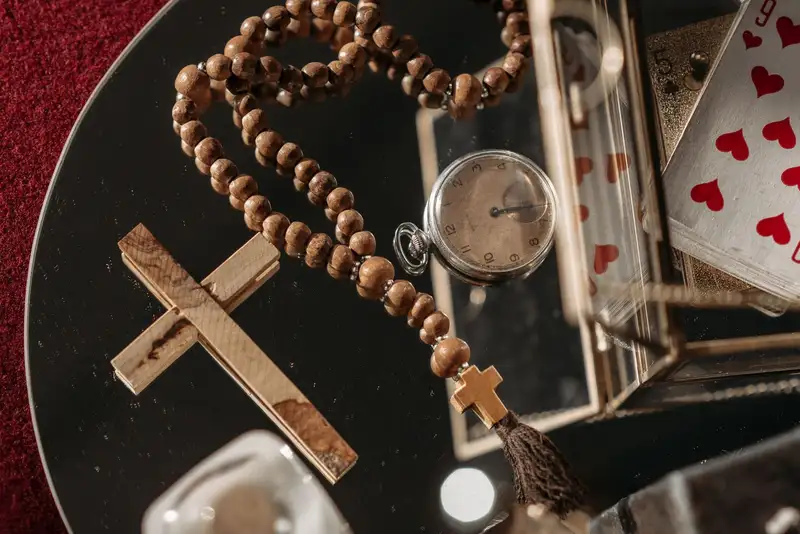
Pack your prayer materials intentionally. A small crucifix. A rosary that means something to you, not just the nicest one you own. A journal, because you will want to write things down and you won't always have time in the moment. The card with your intentions. Maybe a small image of the saint or Our Lady associated with your destination.
Arriving With Open Hands
Here's the hardest part of spiritual preparation: after all the examination, the fasting, the prayer, the confession, the reading... you have to let go of your expectations for what will happen.
Pilgrims who arrive with a rigid idea of what their experience should look like often miss what God is actually offering. The grace doesn't always come where you expect it. It might come in a conversation with a stranger on the bus from Burgos to León. It might come at 6 a.m. in an almost-empty chapel you weren't planning to visit. It might come in exhaustion, or in silence, or in a sudden, inexplicable peace during a moment that seemed completely ordinary.
All of it matters. Every bit of it.
Spiritual preparation makes you available for the pilgrimage: you arrive at the sacred place with your hands open, your heart quiet, your attention directed outward. You've done the interior work. Now let the pilgrimage do what it's meant to do.
Go. Be changed. Come back different.
Comments (0)
No comments yet. Be the first!