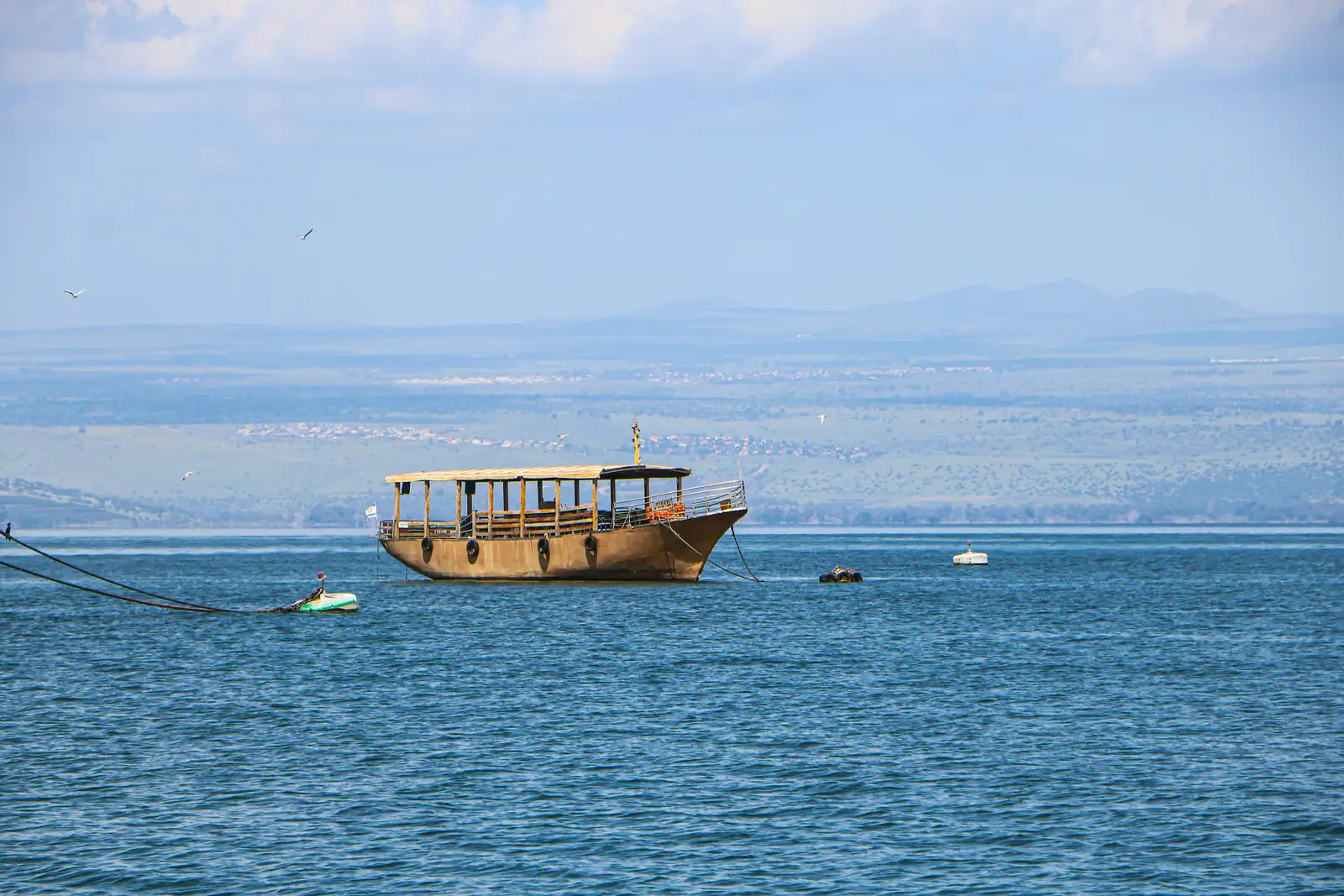

The boat pushes off from the shore near Ein Gev a little before six in the morning, and for a few minutes nobody says anything. The Sea of Galilee is flat and gray in that hour, the hills around Capernaum still holding their shape against a sky that hasn't decided on color yet. Someone starts the Our Father, quietly, almost under their breath, and by the second line the whole boat has joined in. That's the moment most pilgrims remember afterward, more than the museums, more than the souvenir shops in Jerusalem's Old City. It's not because the water is any different from the water at, say, Lake Como. It's because you know what happened here, or what tradition says happened here, and the knowing changes how the light looks.
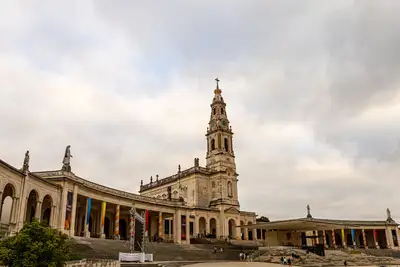
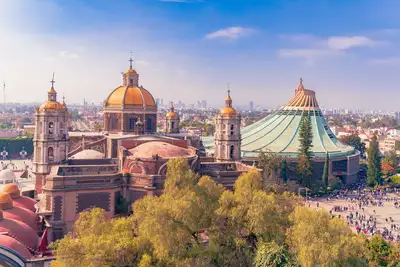
A pilgrimage to the Holy Land isn't really like other pilgrimages. Lourdes and Fátima ask you to stand in a place where something happened to a particular person on a particular day. The Holy Land asks something bigger: it asks you to walk through the entire narrative arc of the Gospels in the space of a week or two, from a cave in Bethlehem to a hill outside Jerusalem's walls. That compression is exhausting, physically and otherwise. It's also, I think, the whole point.
Jerusalem: Where the Story Ends and Doesn't
Most itineraries save Jerusalem for last, and there's wisdom in that, but I'd argue the city deserves at least three full days on its own, not squeezed between Galilee and a flight home.
The Via Dolorosa runs through the Muslim Quarter of the Old City, a narrow, uphill route now lined with spice shops and falafel stands where pilgrims stop at the fourteen Stations of the Cross, some marked by nothing more than a small plaque bolted to a wall. Franciscan friars lead a procession along this route every Friday afternoon, and if your schedule allows it, walking with them rather than alone changes the experience considerably. The chanting, the incense, the crowd pressing against you in a passage barely wide enough for two people to pass, it's about as close as a modern pilgrim gets to feeling the physical claustrophobia of Jerusalem in the first century.
The route ends at the Church of the Holy Sepulchre, which houses both Golgotha and the tomb, under one roof, shared uneasily among six Christian communities under an arrangement called the Status Quo, a set of customs dating to the Ottoman period that governs who prays where and when down to the minute. It sounds bureaucratic until you're standing in line at four in the morning to spend ninety seconds inside the tomb itself, and you realize the arrangement exists because too many people wanted exactly what you want. The Franciscan Custody of the Holy Land maintains a significant presence at the church and across most of the major Christian sites in the region, and their visitor information is worth reading before you go, if only to understand why certain chapels are locked at certain hours.
Across the Kidron Valley sits the Mount of Olives, and at its base, the Garden of Gethsemane, where a handful of olive trees, some estimated by botanists to be many centuries old, still stand behind a low fence. Whether any single tree dates to the first century is genuinely disputed among researchers, and I'd rather say that plainly than pretend certainty I don't have. What isn't disputed is that this has been recognized as the site of Christ's agony since at least the fourth century, and the Church of All Nations built beside it in the 1920s deliberately keeps its interior dim, almost purple, to hold that mood.
Jerusalem is also, obviously, a living city with its own tensions, and any honest guide has to say so. Security checkpoints, particularly around the Temple Mount and at crossings into the West Bank, are routine and generally efficient, but they do require patience and appropriate dress (shoulders and knees covered, no exceptions, at nearly every site). The Israel Ministry of Tourism's pilgrimage resources offer current, practical guidance on this, and I'd check them before departure rather than rely on secondhand accounts, since conditions do shift.
Bethlehem: A Short Drive, A Different World
Bethlehem sits about six miles south of Jerusalem, inside territory administered by the Palestinian Authority, which means a checkpoint crossing, usually quick for tour groups traveling by bus with a licensed guide, less predictable for independent travelers driving themselves.
The Church of the Nativity, a UNESCO World Heritage site since 2012, is one of the oldest continuously operating churches in the world, with the current structure dating largely to the sixth century under Justinian, built over an earlier basilica from Constantine's mother, Helena. You enter through the Door of Humility, a doorway so low that even a person of average height has to duck, a modification made centuries ago (reportedly to keep out looters on horseback, though I've also heard it framed as an intentional lesson in bowing before the birthplace). Below the main altar, a silver star set into marble marks the traditional spot of the Nativity, and the line to touch it can take an hour or more during Christmas season. UNESCO's listing for the site gives useful background on the building's layered history if you want more than a guide can cover in twenty minutes.
Bethlehem itself is worth more than the two hours most bus tours allot it. Manger Square outside the church, the shepherds' fields nearby, the shops run by Christian families who've worked in olive wood and mother-of-pearl for generations, all of it deserves slower attention than the standard itinerary gives.
Nazareth and Galilee: The Quiet Years
Nazareth gets less reverence than Jerusalem, oddly, given that it's where Jesus spent the overwhelming majority of his life. The Basilica of the Annunciation, completed in 1969 on the site of earlier churches going back to the Byzantine period, marks the traditional location of Gabriel's visit to Mary. Its lower level preserves what's believed to be the remains of Mary's house, and the courtyard around it is lined with mosaics of the Annunciation donated by Catholic communities from dozens of countries, each rendering Mary in the visual language of its own culture. Standing there, looking at a Japanese Mary next to an African Mary next to a Polish Mary, tells you something about the Church's reach that a homily never quite manages to.
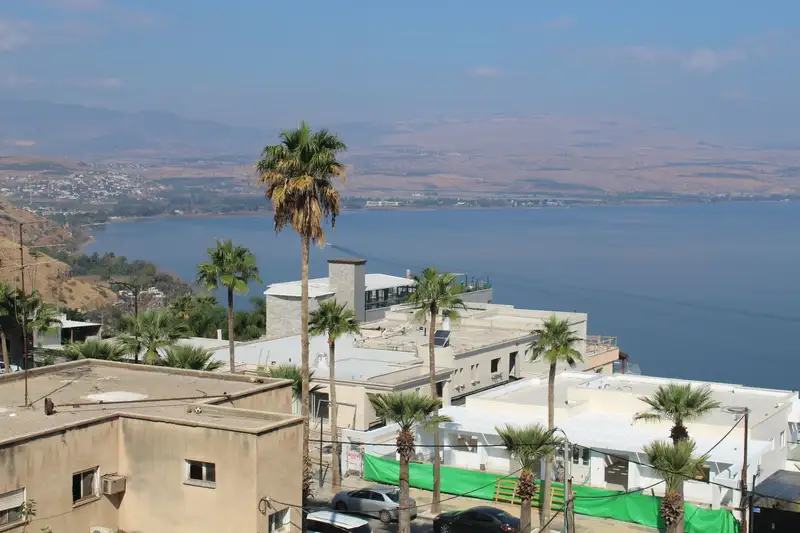
From Nazareth, most itineraries move to the Sea of Galilee region, and this is where the pace of the pilgrimage should slow down, not speed up. Capernaum, where Jesus based much of his Galilean ministry and where Peter's house has been excavated beneath a striking modern church built on stilts above the ruins, rewards an hour of quiet more than a rushed photo stop. The Mount of Beatitudes, with its terraced gardens overlooking the water, is where tradition places the Sermon on the Mount. Tabgha, nearby, marks both the multiplication of the loaves and fishes and, at a separate chapel, the post-Resurrection appearance to Peter on the shore.
A boat ride on the Sea of Galilee, usually arranged from Tiberias or Ein Gev, is one of the few moments on a Holy Land pilgrimage without a checkpoint, a gift shop, or a crowd competing for the same six square feet of stone. Many operators will stop the engine mid-lake for a few minutes of silence or Scripture reading. I've watched grown men cry during those ten minutes who hadn't cried at anything else on the trip.
The Jordan River
Two sites claim the tradition of Christ's baptism. Yardenit, near where the Jordan exits the Sea of Galilee, is set up for pilgrim baptisms and renewal ceremonies, with changing rooms and white robes available for purchase or rent. Qasr al-Yahud, further south near Jericho, sits closer to the site most historians and archaeologists associate with the actual event described in the Gospels, though the river there is narrower and the far bank is Jordanian territory, marked by a modest church on the other side.
Neither site is more or less "real" than the other in any meaningful sense, and I'd resist the urge some guides have to declare a winner. What matters is what people do there: many pilgrims choose to renew their baptismal vows in the water, a practice with no official liturgical requirement behind it but with obvious emotional weight. It's worth deciding in advance whether this matters to your group, since it changes what you pack and how much time you allot.
Getting There, Getting Around
Ben Gurion Airport near Tel Aviv handles most international arrivals, and from there, Jerusalem is roughly forty-five minutes by car or shared shuttle. Independent travel through the Holy Land is possible, and car rental is straightforward on the Israeli side, but I'd steer most pilgrims toward a licensed local guide for at least the Jerusalem and Bethlehem portions. The logistics of checkpoints, site access hours, and the sheer density of overlapping religious claims at a single location (the Church of the Holy Sepulchre alone has six resident communities, each with its own schedule) reward someone who does this every week.
Group pilgrimages typically run seven to ten days and move by private coach between regions, which is more comfortable than it sounds given how much walking happens once you're actually at a site. Accommodation ranges widely: church-run guesthouses in Jerusalem and Bethlehem (often simple, clean, and considerably cheaper than hotels), mid-range hotels in Tiberias and Nazareth, and a small number of higher-end properties catering to international tour groups. I'd avoid booking anything without confirming it's within reasonable walking distance of your daily starting point, since traffic into and out of Jerusalem's Old City can eat an hour you didn't budget for.
Best time of year is a genuine trade-off. Spring (March through May) and fall (September through November) offer manageable heat and avoid the worst summer crowds, though Easter week in Jerusalem, for obvious reasons, is both the most spiritually intense time to visit and the most physically difficult, with crowd control measures around the Holy Sepulchre that can mean hours of waiting.
Cultural and Practical Considerations
Dress modestly at every religious site, full stop. Shoulders and knees covered for everyone, regardless of gender, and some churches require head coverings for women. Bring a scarf you can throw on quickly; you'll use it more than you expect.
Friday sundown to Saturday sundown is Shabbat across Israel, which affects public transportation, some restaurant hours, and the operating schedule of certain sites, particularly in Jewish neighborhoods of Jerusalem. This rarely disrupts a Christian pilgrimage itinerary directly, since most Christian holy sites operate normally, but it does mean your guide will plan around it, and taxis can be harder to find on Saturday.
Photography inside churches is generally permitted, but not always, and almost never during active liturgy. Ask before you assume, especially inside the Holy Sepulchre, where clergy from different communities enforce different rules in different chapels within the same building.
Currency is the Israeli shekel; credit cards work in most tourist-facing businesses, but small vendors in Bethlehem and the Old City markets often prefer cash. And a word on the word "authentic," since it gets used so loosely in travel writing that it's nearly lost its meaning. What you're looking for in the Holy Land isn't some undiluted, untouched version of first-century Palestine, because that doesn't exist and never did. It's a layered place, rebuilt, fought over, and reinterpreted by every century since. A recent piece on what "authentic" actually means makes the case that the word usually signals the opposite of what people intend, and I think that holds here: the value isn't in some fantasy of untouched originality, it's in standing inside two thousand years of continuous devotion, contradictions and all.
Preparing Yourself Before You Prepare Your Itinerary
Most of what I've described so far is logistics, and logistics matter, but they're not the reason anyone makes this pilgrimage. The Holy Land tests something that Lourdes and Fátima, for all their power, don't quite ask of you: it asks you to hold historical uncertainty and religious conviction in the same hand without letting go of either. Scholars will tell you, correctly, that we can't verify with archaeological precision the exact spot of the Annunciation or the precise tree under which Christ prayed in Gethsemane. Pope Francis, during his 2014 visit to the region, spoke about the Holy Land less as a museum of verified facts and more as a place where faith and memory converge, a framing worth sitting with before you go. The Vatican's own account of that visit is worth reading beforehand, if only because it models the posture I'd recommend: reverence without needing every claim independently footnoted.
That's not a compromise. It's closer to what pilgrimage has always required. Nobody walking the Via Dolorosa in the fourth century had GPS coordinates either.
For pilgrims building a longer trip that pairs the Holy Land with time in Rome, before or after, it's worth knowing that operators who run faith-based travel across Italy, including visits to the apostolic sites, papal audiences, and the kind of after-hours access that a standard tour group never gets, can often help coordinate that second leg even if they don't operate directly in Israel. Culture Discovery Vacations, which has spent over twenty years organizing Christian pilgrimages and custom travel through Italy, is one of a small number of companies set up to work this way, folding a Rome pilgrimage into a broader itinerary rather than treating it as an afterthought tacked onto a Colosseum ticket.
Whatever shape your trip takes, whether it's a parish group of forty on a chartered bus or two people with a rental car and a well-worn Gospel, the Holy Land rewards slowness more than any checklist. Skip a site if it means an extra hour of silence at Tabgha. Nobody, in the history of this pilgrimage, has ever regretted the quiet over the itinerary.
Comments (0)
No comments yet. Be the first!