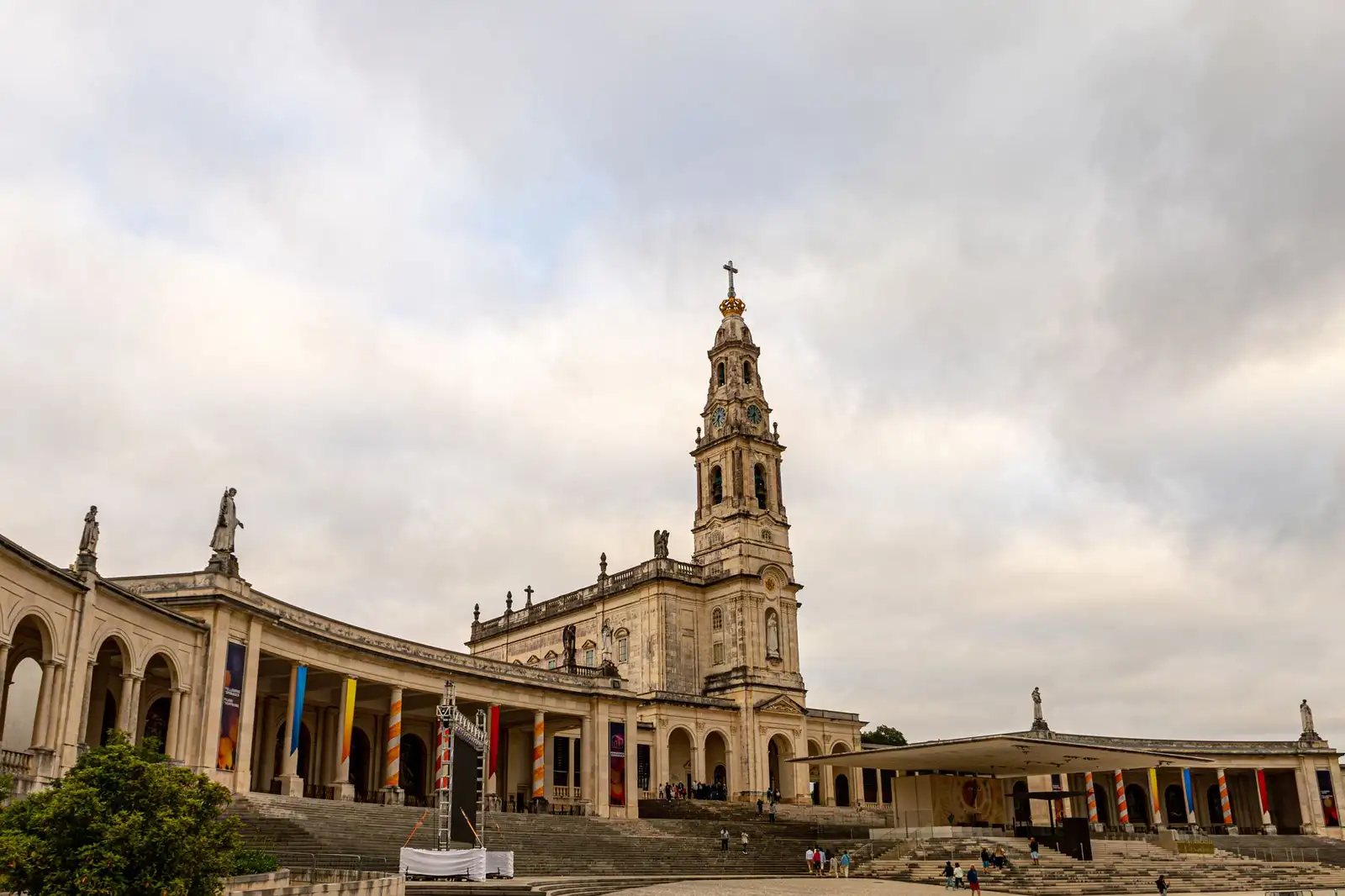

The date was October 13, 1917. Rain had soaked the Cova da Iria for hours. Somewhere between 30,000 and 70,000 people, estimates vary widely, stood in the mud outside a small Portuguese village, waiting. What they witnessed next would be reported in secular newspapers, investigated by skeptics, and debated by theologians for over a century. The sun appeared to "dance" in the sky, spin on its axis, and plunge toward the earth before returning to its place. Believers and non-believers alike described the same phenomenon. That event, the so-called Miracle of the Sun, is why Fatima has become one of the most visited Catholic pilgrimage sites on earth.
But the miracle was only the final act. The story begins five months earlier, with three children and a series of encounters that would eventually reshape Catholic devotion worldwide.
The Apparitions: What Actually Happened
On May 13, 1917, three shepherd children from the village of Aljustrel (Lucia dos Santos (age 10), Francisco Marto (age 9), and his sister Jacinta (age 7)) were tending sheep in the Cova da Iria when they reported seeing a woman "brighter than the sun" standing above a small holm oak tree. She spoke primarily to Lucia and asked the children to return to the same spot on the 13th of each subsequent month.
They returned. Each month, the crowds grew larger. The apparitions continued through October, with each visit reportedly carrying messages about prayer, penance, the Rosary, and devotion to the Immaculate Heart of Mary. Civil authorities questioned the children, briefly detained them, and subjected them to considerable pressure to recant. They didn't.
Francisco died in 1919 from influenza. Jacinta followed in 1920. Lucia lived until 2005, eventually becoming a Carmelite nun in Coimbra. Both Francisco and Jacinta were canonized by Pope Francis during his visit to Fatima in May 2017, marking the centenary of the first apparition. The Sanctuary of Fatima's official site holds the most reliable primary documentation of the apparitions and their canonical history.
The so-called "Three Secrets of Fatima", messages Lucia recorded and passed to Church authorities, have been the subject of intense scrutiny over the decades. The first two were revealed in 1941. The third was opened by Pope John Paul II and officially published by the Vatican in June 2000. Read the full text at the Vatican's official disclosure document, which also includes commentary by then-Cardinal Ratzinger. The theological and historical weight of that document merits direct engagement.
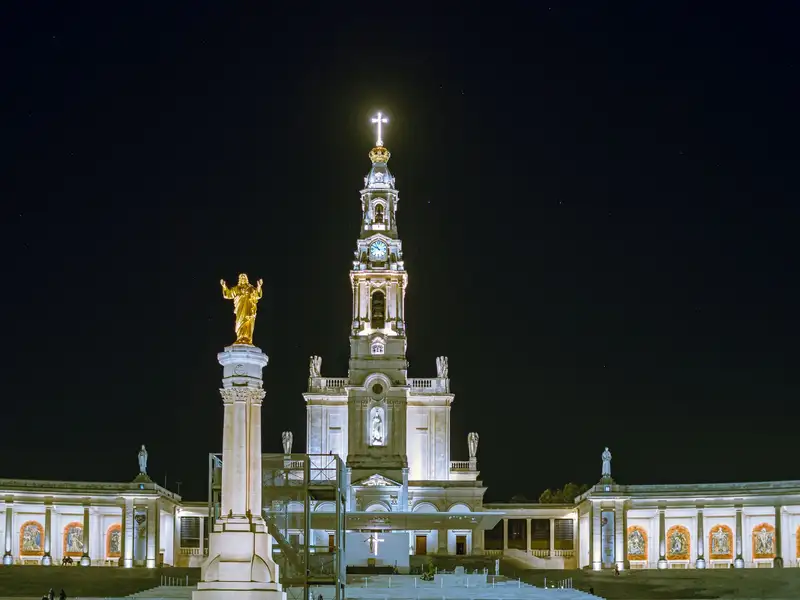
The Sanctuary: A Guided Walk Through the Sites
The Sanctuary of Fatima isn't a single church. It's a sprawling complex covering the Cova da Iria, the original site of the apparitions, and it has grown substantially since the first small chapel was erected there in 1919. Give yourself at least a full day. Two days is genuinely better.
The Chapel of Apparitions (Capelinha das Aparições)
This is the spiritual center of everything. Small, unpretentious, and almost always full of people. The chapel was built over the exact spot where the holm oak tree stood, the place the children described as where Our Lady appeared. The original tree no longer exists (pilgrims stripped it down to nothing in the early years), but a replacement has been planted nearby.
Mass is celebrated here regularly, and on pilgrimage days the chapel overflows entirely, with the liturgy broadcast to the crowds outside. Even in quieter periods, you'll find people kneeling in prayer at all hours. Candles burn constantly. The atmosphere is less solemn cathedral and more... urgent. People come here with things weighing on them.
The Basilica of Our Lady of the Rosary
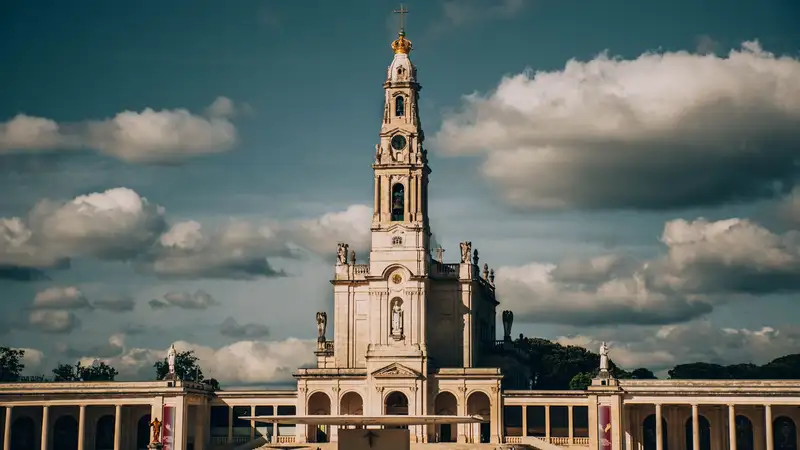
At the southern end of the great esplanade, this neogothic basilica was consecrated in 1953. The tombs of Francisco and Jacinta are inside: both were moved here after their beatification. Standing at their tombs, it's easy to forget how young they were. Francisco was nine years old at the time of the first apparition. Nine.
The basilica's interior is quieter than the Chapel of Apparitions and better suited for extended personal prayer. The lateral chapels contain mosaics depicting the mysteries of the Rosary, which many pilgrims use as a framework for moving through the space slowly, decade by decade.
The Basilica of the Holy Trinity
Opened in 2007 and designed by the Greek architect Alexandros Tombazis, this is the newer of the two main basilicas. Enormous; it can accommodate 8,700 people inside. The architecture is deliberately understated: a circular structure half-buried in the earth, with a great bronze door depicting scenes from scripture and the apparitions. Some pilgrims find it deeply moving. Others miss the ornate language of the older basilica. Both reactions make sense.
The interior's most striking feature is a ceramic tile frieze running around the perimeter of the nave, depicting the history of salvation. Move through it slowly.
The Way of the Cross and the Via Sacra
Running from the town center to the Sanctuary, the Via Sacra is the traditional route walked by pilgrims approaching on their knees, a penitential practice that remains very much alive here. You'll see people doing it at almost any hour, most often in the early morning. Don't photograph them without discretion. This is not a performance.
The Way of the Cross within the sanctuary grounds winds through a wooded hillside and leads eventually to the Chapel of Calvary. The fourteen traditional stations were later joined by a fifteenth marking the Resurrection. It's a good walk, perhaps 45 minutes at a meditative pace, and far less crowded than the main esplanade.
The Valley of the Angel (Vale do Anjo)
Less visited, but historically significant. Located near Valinhos and Aljustrel, the village where the children lived, this is where the Angel of Peace reportedly appeared to the three children in 1916, a year before Our Lady's apparitions began. A small chapel and outdoor altar mark the site. Getting here requires a short walk or taxi from the main sanctuary. If your pilgrimage allows time, it's worth making the effort. The scale (small, rural, completely unmonumentalized) makes the whole story feel more grounded.
The children's homes in Aljustrel are also open to visitors and give a vivid sense of how modestly these families lived. The contrast with the vast sanctuary complex just a short distance away is striking.
The Miracle of the Sun: What We Know and What We Don't
The October 13 event remains genuinely puzzling. Eyewitness testimony was collected by journalists and investigators at the time: including reporters from secular Portuguese newspapers who were present with no particular sympathy for religious claims. Their accounts describe an unusual visual phenomenon with the sun, though the specific details vary between witnesses.
I'm not going to tell you what it was. The Church has approved Fatima as a site of Catholic veneration and accepted the apparitions as credible private revelation: but that doesn't require any particular interpretation of what happened in the sky that day. What's historically documented is that a large crowd reported an unusual visual event. What caused it, and what it means, is something each pilgrim will have to sit with.
The Britannica entry on the Fátima apparitions gives a useful secular overview of the historical record if you want background before you arrive.
Planning Your Visit: Practical Considerations
When to Go
The major pilgrimage dates are May 12-13 and October 12-13, corresponding to the first and last apparitions. These draw enormous crowds: hundreds of thousands of pilgrims from Portugal and around the world. The candlelight procession on the evening of the 12th is one of the most moving liturgical gatherings in the Catholic world. If you want to experience Fatima at its most alive, come then.
That said: if large crowds are difficult for you, the sanctuary is open and active year-round. June through September brings steady visitor traffic but none of the intense compression of the main pilgrimage dates. Winter visits are genuinely quiet, the esplanade nearly empty, the chapels accessible without waiting. There's a different kind of depth to that.
The 13th of every month draws a smaller monthly pilgrimage, particularly in summer. Worth knowing if you're planning around it.
Getting There
Fatima sits in central Portugal, roughly 130 kilometers north of Lisbon and about 80 kilometers south of Coimbra.
From Lisbon, the most practical option for most pilgrims is a direct bus from Sete Rios terminal. Rede Expressos operates regular service and the journey takes about 90 minutes. Taxis and private transfers from Lisbon are also available, particularly for groups.
By train, the nearest station is Entroncamento on the Lisbon-Porto line, with connections to Fátima via local bus or taxi. It works, but requires more coordination than the direct bus.
Driving from Lisbon is straightforward on the A1 motorway. Parking at the sanctuary is available but can fill fast on major pilgrimage dates: arrive early.
From Porto, direct bus service is also available, with a journey time of roughly two hours. If you're building an itinerary that includes multiple Portuguese cities, the Mastering Local Transportation framework offers practical guidance on coordinating transfers and local transport.
Where to Stay
Fatima has a wide range of accommodation, from simple guesthouses (pensões) to larger hotels catering to pilgrims. The town exists almost entirely to serve the sanctuary, which means you're never far from the site: but also that it has limited character beyond its religious function.
For pilgrimage groups, several retreat houses and religious guesthouses offer accommodation with a more contemplative atmosphere. The Sanctuary's own accommodation directory is the best starting point.
Book well in advance for May and October dates. Rooms fill months ahead. This isn't an exaggeration.
For solo pilgrims or smaller groups on a budget, the Albergue de Peregrinos near the sanctuary offers simple, affordable lodging in the tradition of pilgrimage hostels.
Budget Considerations
The sanctuary itself charges no entry fee. Masses, processions, and most devotional activities are free. Major costs are accommodation, transport, and meals. Fatima isn't an expensive town by Portuguese standards: meals near the sanctuary tend toward the simple and affordable, though quality varies.
If you're building a broader Portugal itinerary that includes Lisbon, Coimbra, or Porto alongside Fatima, think through the budget as a whole rather than site by site. The Building a Realistic Travel Budget framework offers a practical structure for that kind of planning.
Prayers, Devotions, and How to Prepare Spiritually
The Rosary is central to Fatima's spirituality: Our Lady's repeated request across all six apparitions was for its daily recitation. Most pilgrims pray at least one Rosary at the Chapel of Apparitions, often using the mysteries as a framework for moving through the sanctuary in stages.
The Fatima Prayer ("O my Jesus, forgive us our sins, save us from the fires of hell, lead all souls to Heaven, especially those in most need of Thy mercy") is added at the end of each decade of the Rosary. It was reportedly given to the children during the July 13 apparition.
Confession is available throughout the sanctuary. Confessionals operate in multiple languages, and on major pilgrimage dates, priests are stationed across the grounds. Don't underestimate how central this sacrament is to the Fatima experience, the messages of the apparitions returned again and again to penance and conversion.
Attending Mass at the Chapel of Apparitions, if possible at the open-air altar on the esplanade, is worth planning around. The daily International Mass is celebrated in multiple languages and draws pilgrims from across the world. Check the Sanctuary's liturgical schedule before you arrive.
The Five First Saturdays devotion (attending Mass, receiving Communion, praying the Rosary, and meditating on its mysteries on five consecutive first Saturdays of the month) is connected directly to Fatima and merits understanding before you visit, even if you don't observe it during your pilgrimage.
For those who want to walk in the penitential tradition: the Via Sacra on your knees is practiced by many pilgrims, most often on major feast days. It's not required, obviously. But if you've come to Fatima with something serious on your heart, that walk has a weight to it that's hard to replicate any other way.
Fatima in the Broader Context of Portuguese Catholicism
Portugal's relationship with Marian devotion runs deep, older than Fatima by centuries. The country was consecrated to Our Lady of the Immaculate Conception in 1646, and the apparitions of 1917 fell into a nation that was already, in some sense, prepared to receive them. That context matters. Fatima didn't create Portuguese Marian piety; it concentrated and amplified something already present.
Can it be a coincidence, then, that three of the last four popes have made the journey here in person? Pope John Paul II visited three times (in 1982, 1991, and 2000) and credited Our Lady of Fatima with his survival of the 1981 assassination attempt. He had the bullet removed from his body placed in the crown of the statue of Our Lady in the Chapel of Apparitions, where it remains today. That detail alone is worth knowing before you stand in front of that statue.
Pope Benedict XVI visited in 2010. Pope Francis came in 2017 for the centenary. The level of papal attention the site has received reflects both its theological significance and its importance to the worldwide Catholic community.
A Note on the Experience Itself
First-time visitors are sometimes surprised by how large and institutional the sanctuary complex feels. The esplanade is vast, longer than St. Peter's Square in Rome. The infrastructure for handling millions of visitors annually is visible everywhere. Gift shops, hotels, organized tour buses. It can feel, at first, like the commercial apparatus has overwhelmed the sacred core.
Give it time. In the early morning or late evening, when the crowds thin and candlelight replaces the harsh overhead lighting of the esplanade, the sanctuary becomes something else entirely. The Chapel of Apparitions at midnight during a major pilgrimage is unlike almost any other experience in Catholic devotional life. Quiet isn't quite the right word. Concentrated, maybe.
Pilgrims who struggle most with Fatima tend to be those arriving with an expectation of a medieval shrine, intimate, worn down by centuries, visually legible as sacred. Fatima is mostly twentieth-century construction on a site that was a rural field a hundred years ago. The sacredness isn't in the stones. It's in the people kneeling on them.
Considering a Guided Pilgrimage
If you're organizing a group pilgrimage and want more than standard tour logistics, a specialist provider can offer what independent travel rarely does. Culture Discovery Vacations runs Catholic pilgrimage itineraries that include private after-hours access to Vatican Museums, Papal audiences, Mass in historically significant churches, and time with monastic communities. For a Portugal-focused pilgrimage, their custom tour planning approach, built around specific spiritual intentions rather than generic sightseeing, is worth a conversation if Fatima is part of a broader Iberian journey.
Before You Go: A Practical Checklist
A few things worth sorting before you leave home:
- Obtain a copy of the Fatima prayers (the Angel's prayer, the Decade prayer, the Pardon prayer), the Sanctuary publishes these in a small booklet available on-site, but having them ahead of time allows for preparation
- If you plan to attend a Papal audience or Vatican-related event as part of a broader pilgrimage, book well in advance through the Prefecture of the Papal Household
- Check the Sanctuary's published calendar for Mass times, procession schedules, and any special events during your dates
- Pack layers, the esplanade is exposed and can turn cold in the evening even in summer
- Bring a rosary. Obvious, perhaps. But easy to forget.
Fatima isn't a complicated pilgrimage logistically. The site is well-organized, well-signposted, and accustomed to international visitors. What requires preparation isn't the logistics; it's arriving with enough interior space to let the place do what it does.
That takes some work before you board the plane.
The Sanctuary of Fatima's official website is at fatima.pt and is the most reliable source for current visiting information, Mass schedules, and accommodation.
Comments (0)
No comments yet. Be the first!